.avif)
Finding a foundry that can reliably produce lead-free castings often means dealing with limited alloy options or regulatory compliance uncertainty. Many shops lack the testing equipment to verify lead content or the metallurgical expertise to pour specialized alloys.
Lincoln Foundry provides lead-free casting services for a wide range of industries requiring verified compliance and material performance. We combine metallurgical expertise with spectrographic testing to guarantee every casting meets applicable lead-free standards, whether federal, international, or customer-specified.
Read on to learn more about our capabilities and why more compliance-driven industries choose Lincoln Foundry for their lead-free casting needs.
Get a Quote for Lead Free Casting Services »
Lead-free casting is the process of manufacturing metal components using alloys with little to no lead. Depending on the application, "lead-free" may mean less than 0.25% by weight or no lead at all.
Lead-free castings are important because:
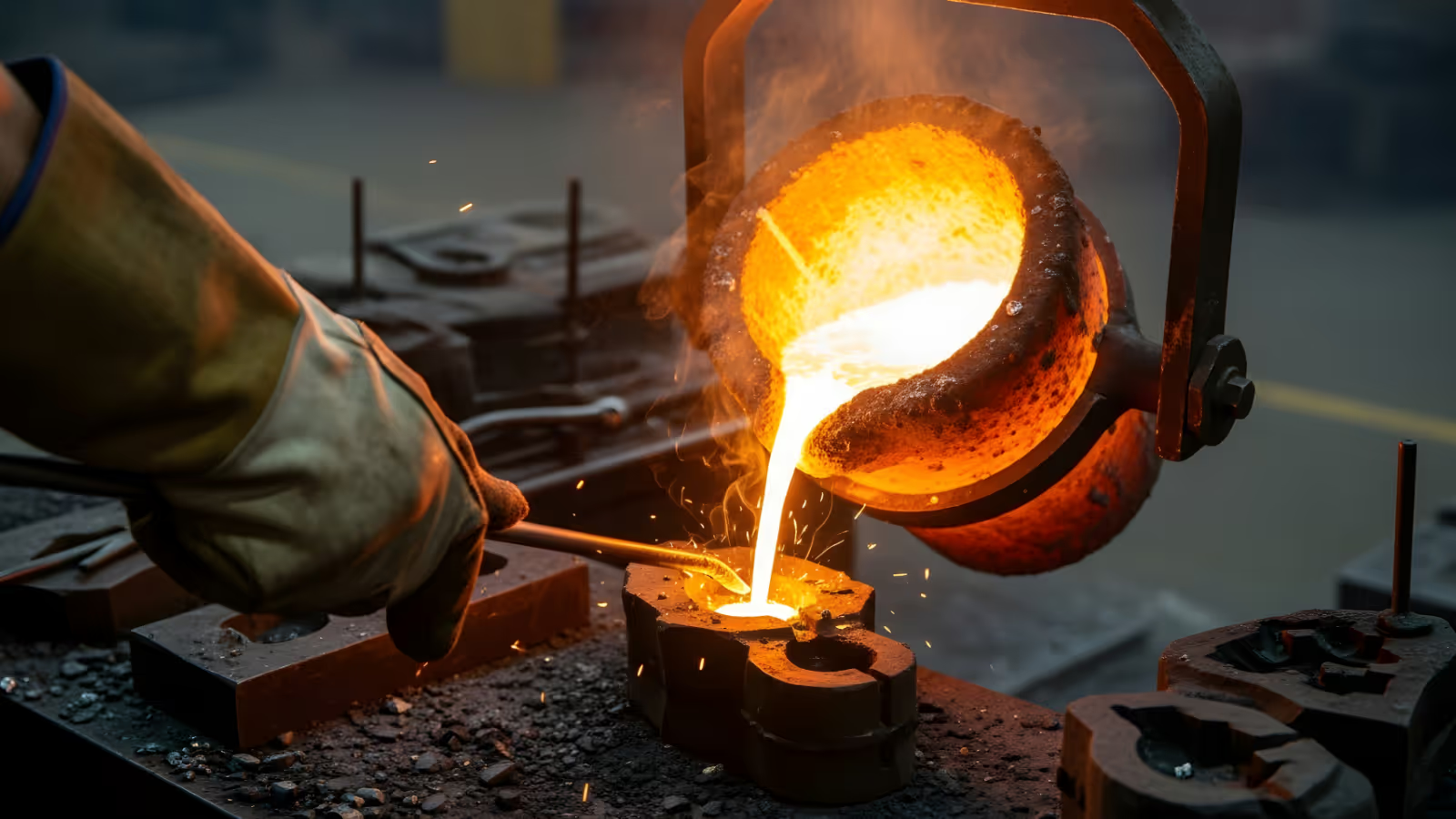
At Lincoln Foundry, we're a lead-free casting company based in Pennsylvania. We pour parts ranging from 1 ounce to 100 pounds in verified lead-free alloys for industries that demand regulatory compliance and material performance. Our facility in Erie combines hands-on management with spectrographic testing to guarantee that every casting meets the federal lead-free standard before it leaves our shop.
Our alloy selection includes a wide range of materials that meet both mechanical performance requirements and strict legal requirements. This inventory spans from specialized bismuth bronzes designed for plumbing compliance to naturally lead-free options like stainless steel and aluminum. We verify the lead content of every heat using spectrographic analysis to ensure your castings meet regulatory requirements.
There are three main categories of lead-free metals we work with:
These are copper-based alloys specifically engineered to meet lead-free regulations while maintaining the performance characteristics of traditional brass and bronze:
These materials contain zero lead by their chemical makeup and have always been safe for any application without requiring special formulation:
This alloy contains a small amount of lead but stays under the 0.25% threshold, making it legal for potable water contact despite not being marketed as "lead-free."
Lead-free castings are required in any industry where parts contact drinking water, food, or human tissue. Applications for lead-free casting services range from municipal water infrastructure to consumer products sold directly to homeowners:
Plumbing and Water Distribution: Municipal water districts specify C89833 bismuth bronze and C87500 silicon brass for valves, fittings, and meter components. Fire hydrant internals and backflow preventer bodies handle drinking water under pressure. Federal law requires these components to meet lead-free standards.
Children's Products: The Consumer Product Safety Improvement Act (CPSIA) limits lead content to 100 ppm in accessible parts of children's products. Naturally lead-free alloys like aluminum and stainless steel provide a straightforward compliance path for toy and juvenile product manufacturers.
Food and Beverage Processing: Breweries and dairies need equipment that resists corrosion from acidic or alkaline products. Stainless steel and aluminum alloys dominate valve bodies and pump components in these facilities. FDA requirements for food contact surfaces indicate that naturally lead-free materials are the only acceptable choice.
Electronics and Electrical Equipment: RoHS and WEEE directives restrict the use of lead in electronics sold in the EU and many other markets. Lead-free castings for housings, enclosures, and electrical components help manufacturers meet these international requirements.
Medical and Laboratory Equipment: Surgical instruments and diagnostic equipment housings must be made from certified lead-free materials. Stainless steel castings dominate this market. Even trace levels of lead contamination fail to meet the biocompatibility standards required for medical applications.
Hardware and Consumer Products: Door hardware and faucet components increasingly specify lead-free materials even when not legally required. C87500 silicon brass offers traditional brass aesthetics with modern safety profiles. Manufacturers avoid potential liability while meeting California Proposition 65 requirements.
Lead-free casting services require both metallurgical knowledge and quality control systems that can verify compliance before parts leave the foundry. Understanding which alloys meet your application requirements helps you choose the right material while staying compliant with federal regulations.
At Lincoln Foundry, we combine decades of sand casting experience with spectrographic analysis to produce verified lead-free components across multiple industries. Our team works closely with engineers and procurement teams to ensure every order meets spec.
Click below to request a quote and learn more about our capabilities.
Christopher Campbell
Experienced leader at Lincoln Foundry with 15+ years spanning shop floor to ownership. Combines hands-on molding expertise with executive oversight, RFQ quoting, and metallurgical testing to deliver high-quality non-ferrous castings with exceptional consistency and low defect rates.
Key Differentiators