Get Quote for C99700 Castings »
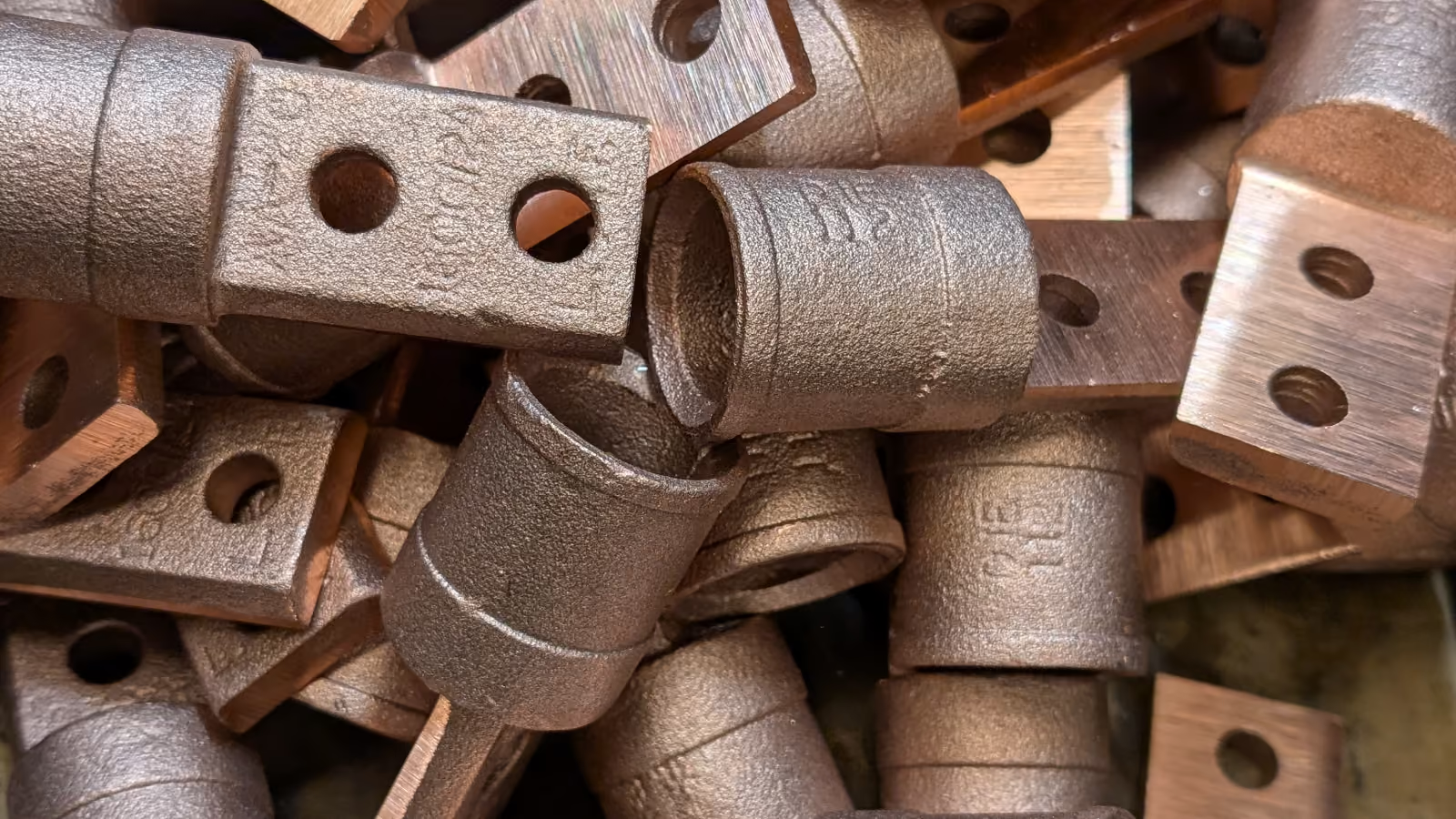
Castings that require a silver-white finish typically require stainless steel, which has expensive casting processes and difficult machining. C99700 white tombasil nickel bronze provides that same premium appearance with significantly better manufacturing characteristics.
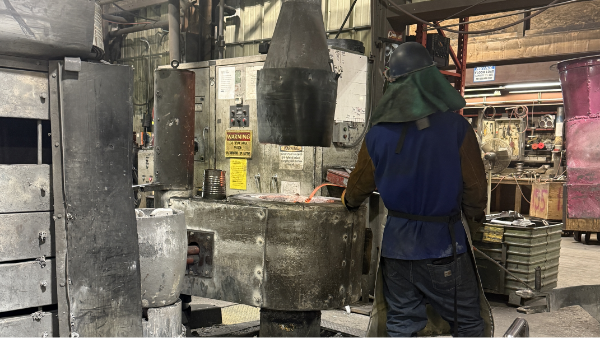
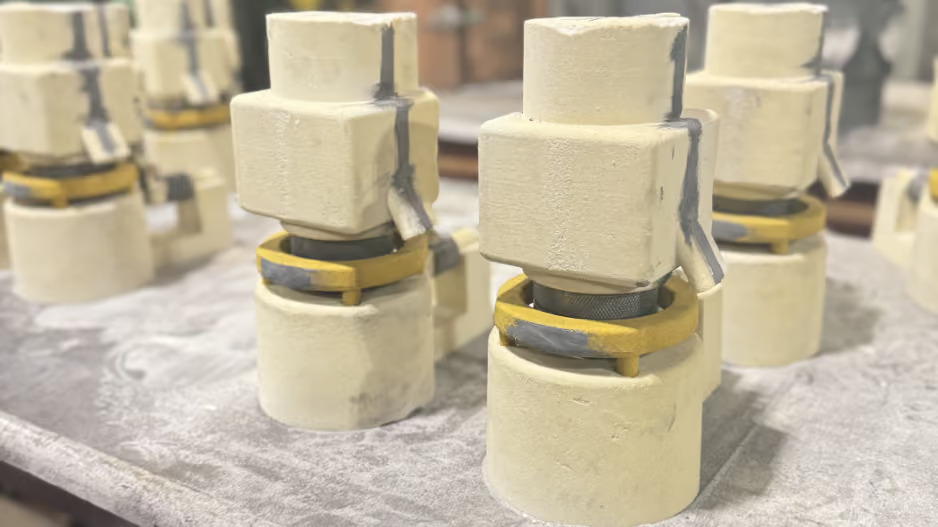
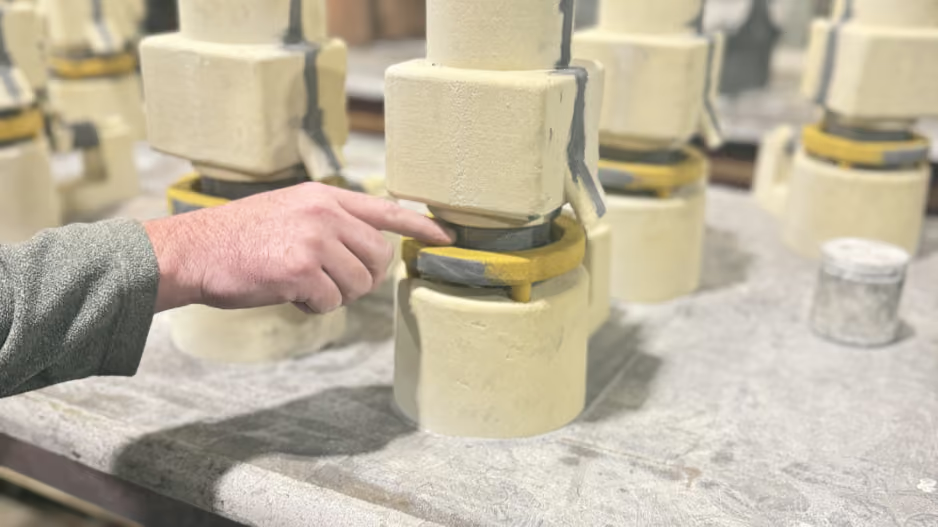
At Lincoln Foundry, we sand-cast low-lead C99700 components using in-house pattern development and sand molding. This alloy delivers stainless-steel aesthetics while casting and machining more efficiently than ferrous alternatives.
Read on to discover how C99700 delivers stainless-steel aesthetics at a fraction of the cost while meeting strict low-lead requirements.
Engineers often specify C99700 white tombasil nickel bronze to achieve a precise balance of "white metal" aesthetics and manufacturing efficiency that standard bronzes cannot deliver.
C99700 (White Tombasil Nickel Bronze) resists corrosion in exposed architectural and water service components. It eliminates the need for more expensive plated coatings while preventing rust staining and premature failure. As a low-lead alternative to stainless steel, C99700 castings eliminate secondary plating costs while meeting low-lead requirements (2.0% max) for water service components. This alloy avoids the rust concerns of carbon steel and offers a cost-effective solution for drainage systems that require both durability and a premium silver appearance.
Lincoln Foundry, an Erie, PA-based casting manufacturer, specializes in sand-casting low-lead C99700 components using in-house pattern-making and flexible sand molding techniques. The low-lead composition (2.0% max) ensures regulatory compliance for water contact applications without compromising the material's exceptional fluidity and finishing characteristics.
Specifying this alloy eliminates secondary plating costs by providing a naturally silver, corrosion-resistant finish that meets strict low-lead standards. We deliver high-integrity raw castings that provide a defect-free foundation for your specific finishing requirements with competitive costs and expedited turnaround times.
C99700 white tombasil nickel bronze occupies a unique position between traditional yellow bronzes and stainless steel alloys. Understanding where this low-lead alloy outperforms alternatives helps engineers specify the right material without over-engineering simple components.
Alloy selection directly affects project costs and regulatory compliance for water-contact applications. Choosing based on appearance alone can result in either overspending on difficult-to-manufacture materials or selecting alloys that fail lead content requirements.
C99700 achieves tensile strength comparable to mild steel through a high-manganese formulation that limits lead content to a maximum of 2.0%.
The above properties determine whether C99700 can handle your application's structural loads and installation conditions. Verifying strength and elongation data before production prevents costly material failures or over-engineering with heavier, more expensive alloys.
Q: Is C99700 magnetic?
A: No, C99700 is a non-ferrous, non-magnetic copper alloy suitable for instrumentation and housings where magnetic interference is a concern.
Q: Does Lincoln Foundry polish the castings?
A: We supply high-quality "rough" or "raw" castings that serve as the defect-free substrate for your specific machining or polishing workflows.
Q: What is the difference between C99700 and Nickel Silver?
A: While visually similar, C99700 is a manganese brass that offers superior castability and lower material costs compared to traditional nickel silver alloys.
Q: Can C99700 be welded?
A: Yes, this alloy can be joined using gas tungsten arc welding (GTAW) with appropriate filler metals, though specific heat control is required to prevent zinc fuming.
Q: How does the machinability compare to steel?
A: C99700 machines significantly faster than stainless steel, producing short, broken chips that reduce tool wear and cycle times.
C99700 white tombasil nickel bronze combines low-lead compliance with silver-white aesthetics and superior castability. This alloy eliminates plating costs and rust concerns while delivering corrosion resistance across demanding environments.
Lincoln Foundry delivers C99700 castings with integrated pattern development and sand casting under one roof. This approach gives you control over your finishing specifications while ensuring consistent quality from pattern to pour.
Click below to request a quote and learn more about our C99700 white tombasil nickel bronze casting services.
Get a Quote for C99700 Casting Services »
University of Texas at Austin, School of Architecture Materials Lab. (n.d.). Tombasil | White [Sand casted bronze | nickel alloy material sample]. Materials Lab Database. Retrieved February 13, 2026, from The University of Texas at Austin
Christopher Campbell
Experienced leader at Lincoln Foundry with 15+ years spanning shop floor to ownership. Combines hands-on molding expertise with executive oversight, RFQ quoting, and metallurgical testing to deliver high-quality non-ferrous castings with exceptional consistency and low defect rates.
Key Differentiators