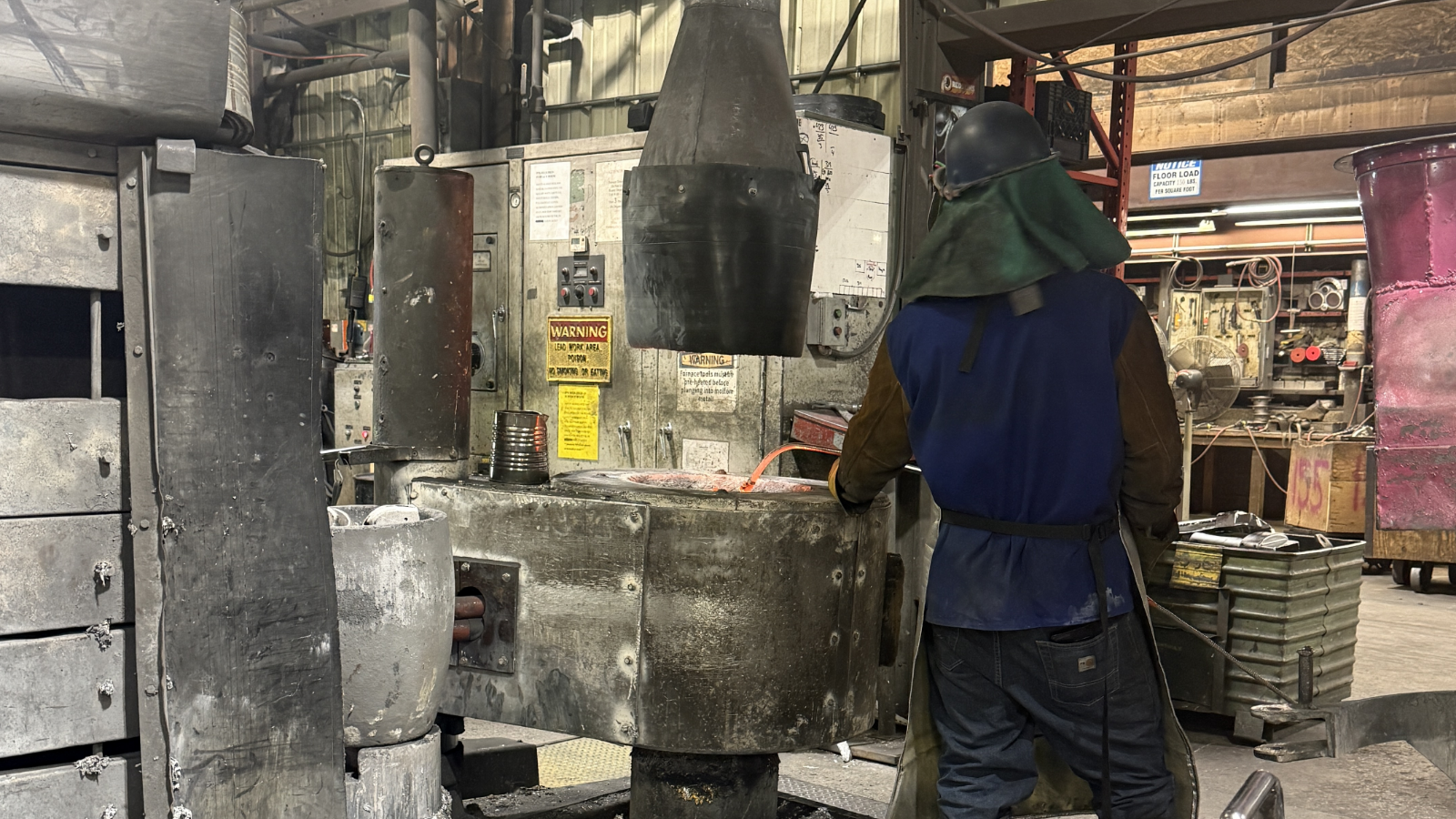
A brass casting for a critical industrial application must meet an exact alloy specification. Buyers often cannot confirm that specification until the casting already ships. That gap makes choosing the right casting supplier a genuinely difficult decision.
At Lincoln Foundry, every casting we pour comes with a documented alloy composition and a tested mechanical record. That documentation gives buyers confidence in a part long before installation.
Read on to learn more about the alloys we pour, how we test each casting, and what sets us apart as an American brass foundry.
Get a Quote from an American Brass Foundry »
Imported brass castings require cross-border transportation and U.S. customs clearance. A U.S. buyer avoids those import steps by ordering from an American brass foundry:
Direct Communication: Overlapping U.S. business hours let buyers discuss drawings and specifications directly with foundry staff.
Domestic Freight: Truck freight can move castings across the continental United States without international ocean transit.
Import Administration: Domestic production avoids customs entries, tariff classification, and import duties on the finished casting.
Supplier Accountability: Direct purchasing keeps production responsibility with the domestic foundry named on the purchase order and gives the buyer one source for order documentation.
Domestic Transactions: U.S. dollar pricing keeps the quote and payment in the same currency for a domestic buyer and removes a separate foreign exchange calculation from the purchase.
Lincoln Foundry is an American brass foundry that pours brass castings for a wide range of industrial customers. Our Pennsylvania operation supports custom orders from a U.S. production base:
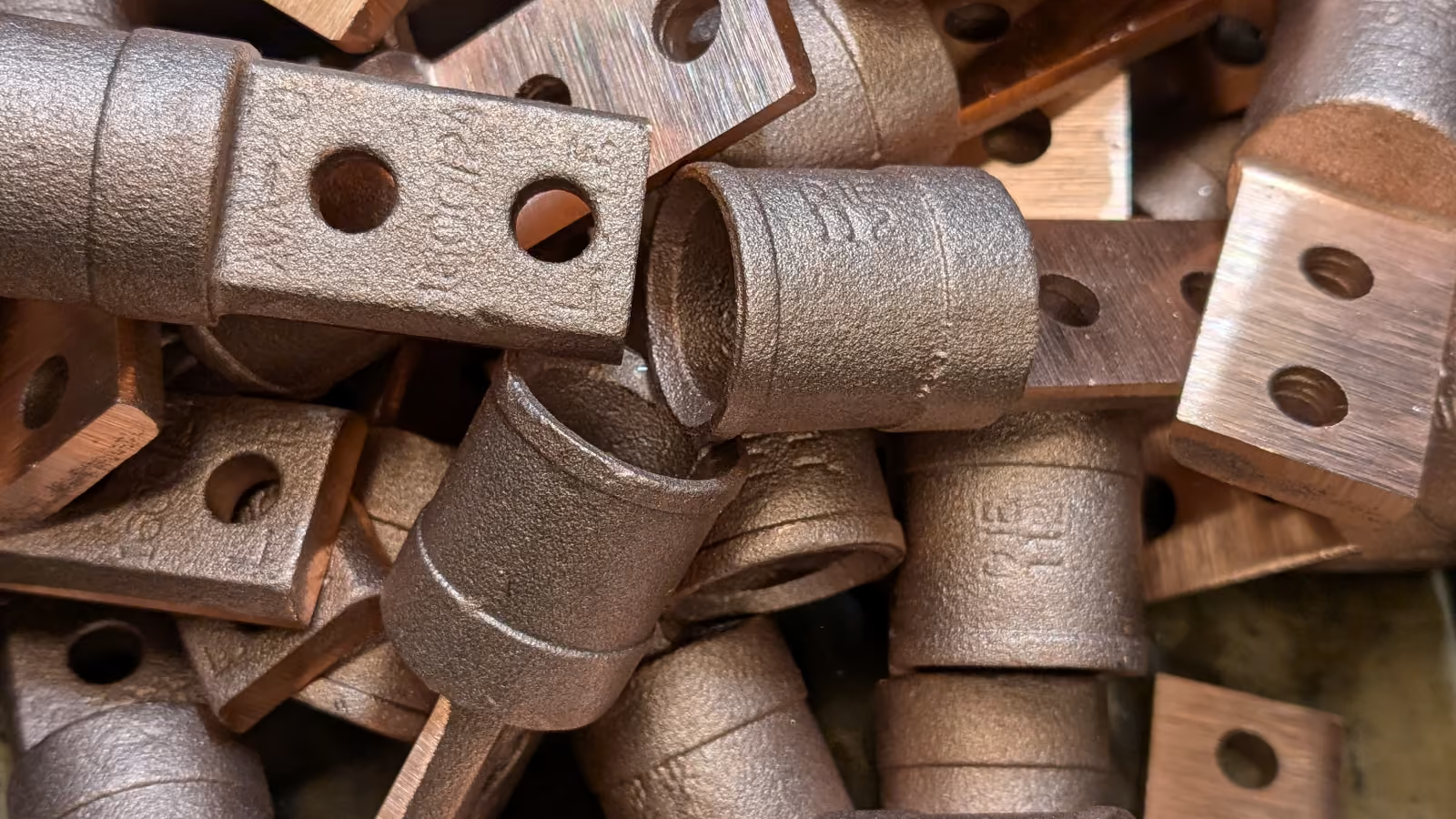
Our red brass range includes C83300 and C83600 plus semi-red brass C84400. Each alloy contains copper with specified amounts of tin, zinc, and lead. Their machinability ratings are 35 for C83300, 84 for C83600, and 81 for C84400.
Manganese bronze grades C86200, C86300, and C86500 provide greater tensile strength than our red brass options. Lead-free C89833 provides a copper-bismuth alternative to leaded C83600 for castings with strict lead-content requirements. An 81 machinability rating matches this alloy to the same rating carried by semi-red brass C84400.
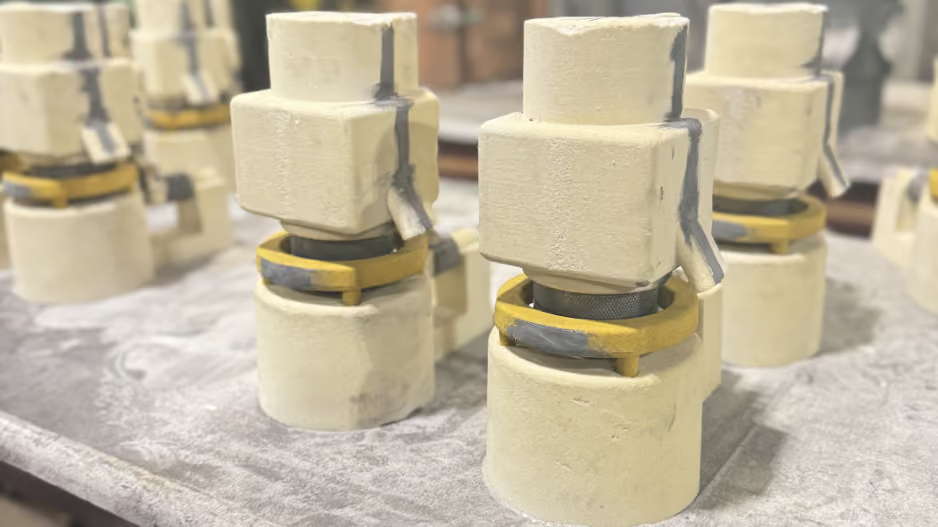
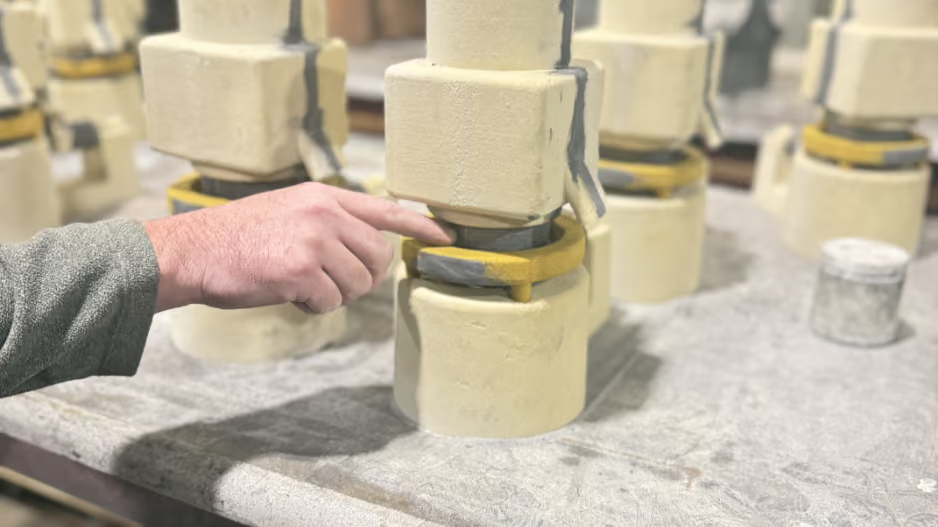
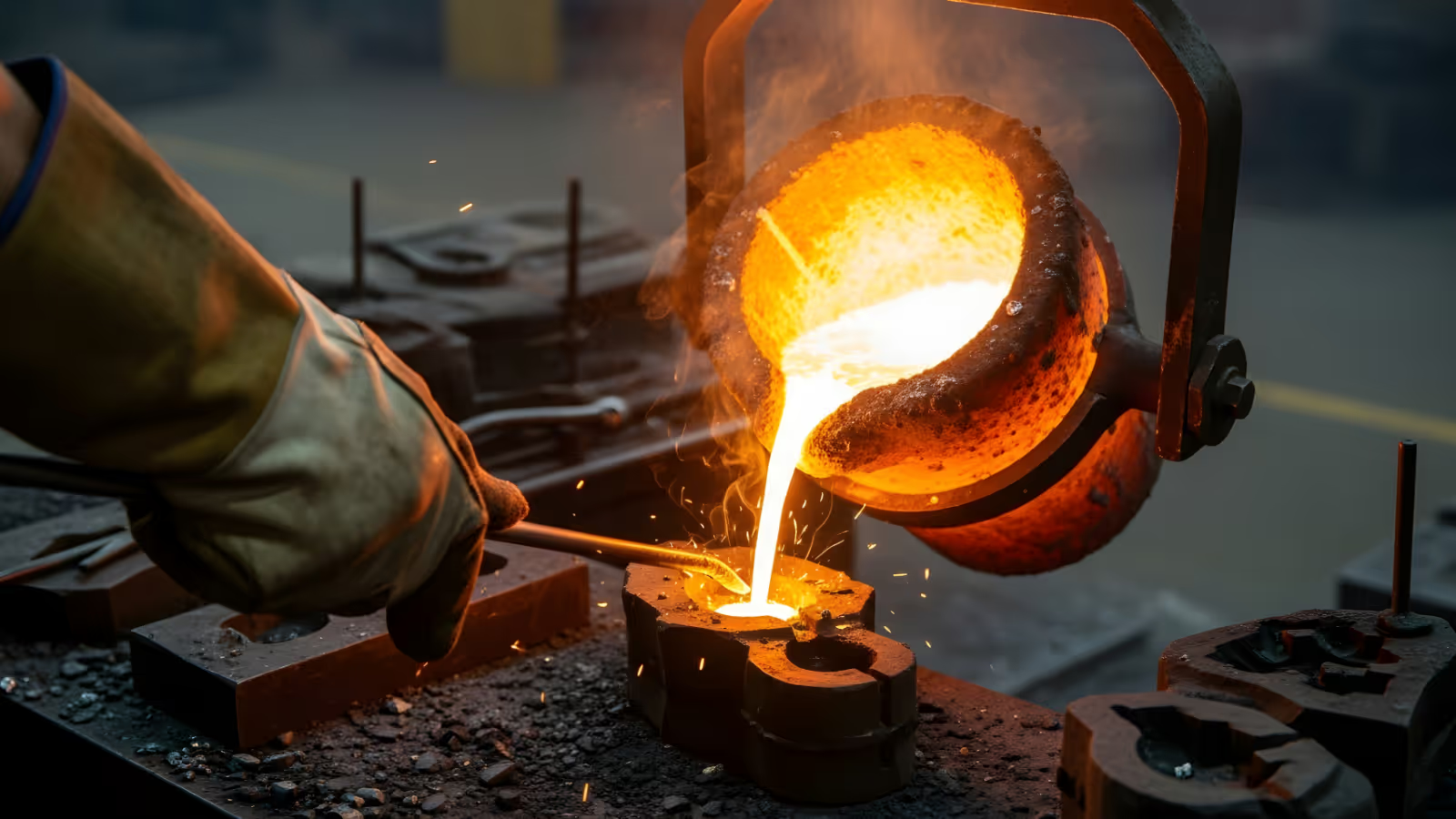
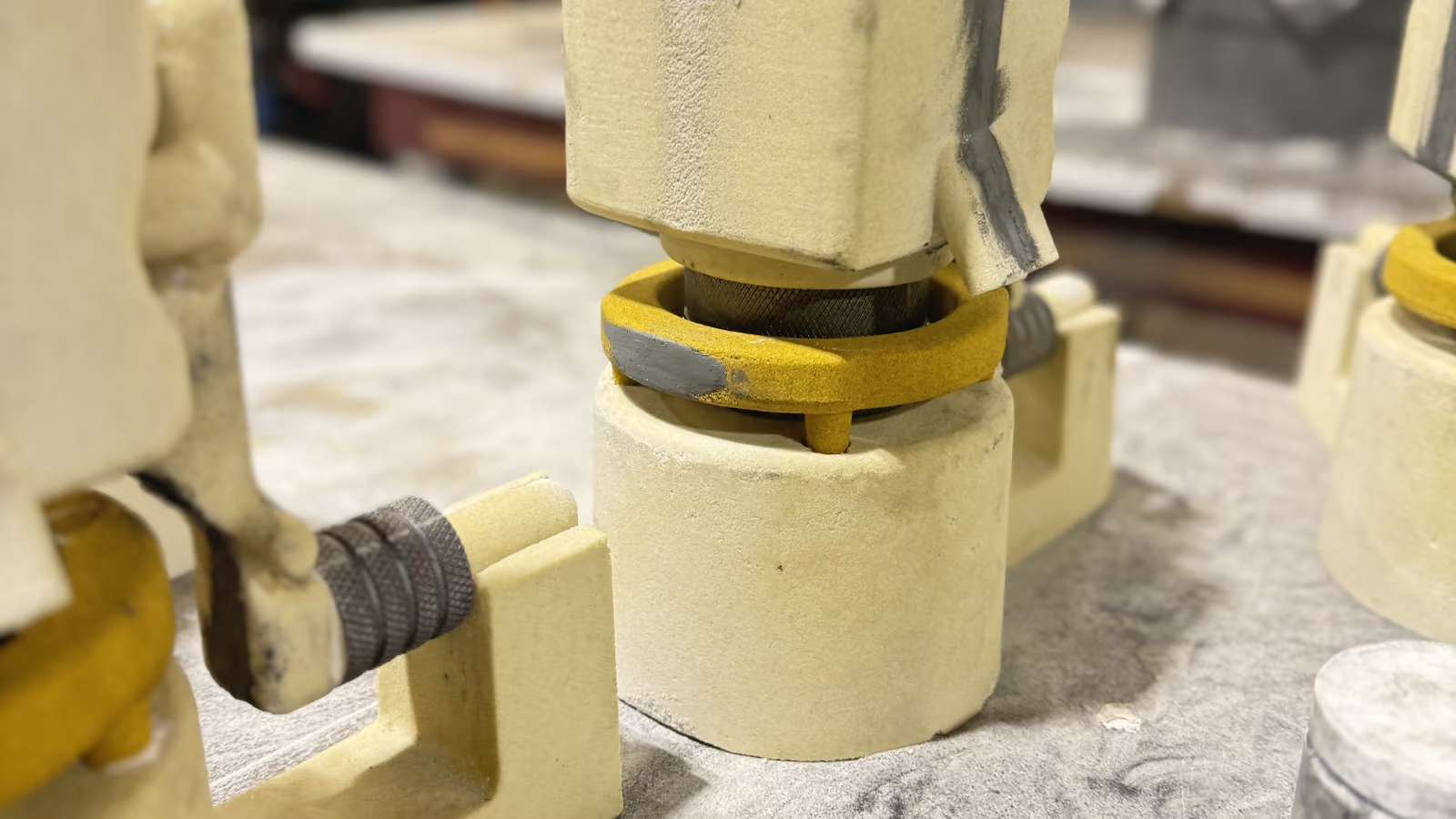
At Lincoln Foundry, our pattern shop uses existing tooling or builds new wood, aluminum, plastic, or 3D-printed patterns from customer drawings. Sprues, runners, and gates form a controlled flow path for molten metal inside each prepared sand mold. Risers supply brass during solidification to offset the volume lost through normal casting shrinkage.
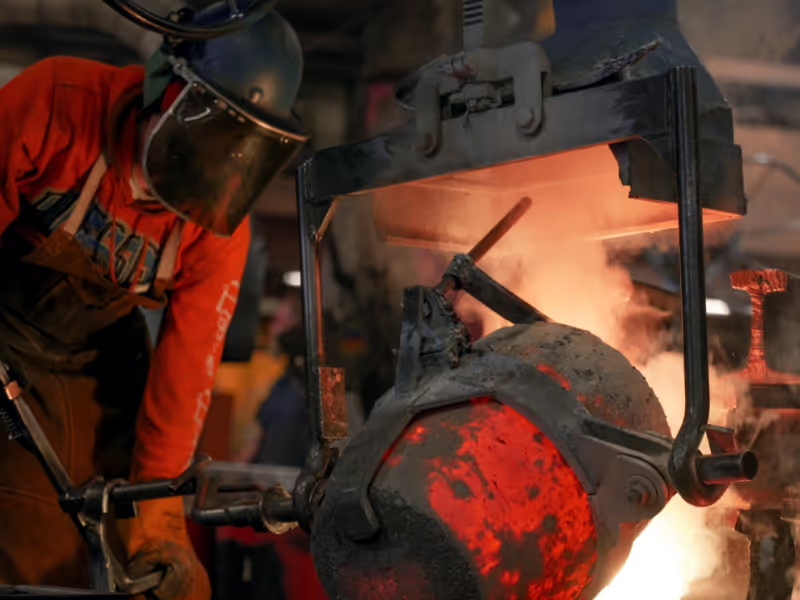
Finished castings range from 0.01 to 100 pounds and reach up to three feet in length. Dual-pot pouring supplies additional metal for larger parts near the upper end of our capacity. Calibrated immersion pyrometers measure the brass temperature before each pour and support controlled melt conditions throughout production.
Our SPECTROLAB analyzer verifies the chemical composition of every heat against the specified brass grade. Each reading reports the measured concentration of the elements present in the alloy. We use those results to identify off-specification chemistry before the castings leave our facility.
Mechanical testing uses a prepared test bar from the specified alloy to represent the poured metal. Our in-house bar puller measures yield strength, tensile strength, and elongation upon request. Those measurements provide the mechanical data required for comparison with customer specifications or applicable ASTM B584 limits.
Brass and bronze castings go into pumps, valves, and fittings built for demanding operating environments. Lincoln Foundry supplies castings for a wide range of industries, including:
Choosing a brass casting supplier means weighing alloy quality, testing rigor, and long-term reliability. An American brass foundry keeps every part of that decision easier to verify.
Lincoln Foundry pours brass castings backed by three generations of hands-on experience in Erie, Pennsylvania. Every casting leaves our facility with the alloy accuracy and testing record buyers need for a critical application.
Click below for a quote and to learn more about our brass casting capabilities.
Christopher Campbell
Experienced leader at Lincoln Foundry with 15+ years spanning shop floor to ownership. Combines hands-on molding expertise with executive oversight, RFQ quoting, and metallurgical testing to deliver high-quality non-ferrous castings with exceptional consistency and low defect rates.
Key Differentiators