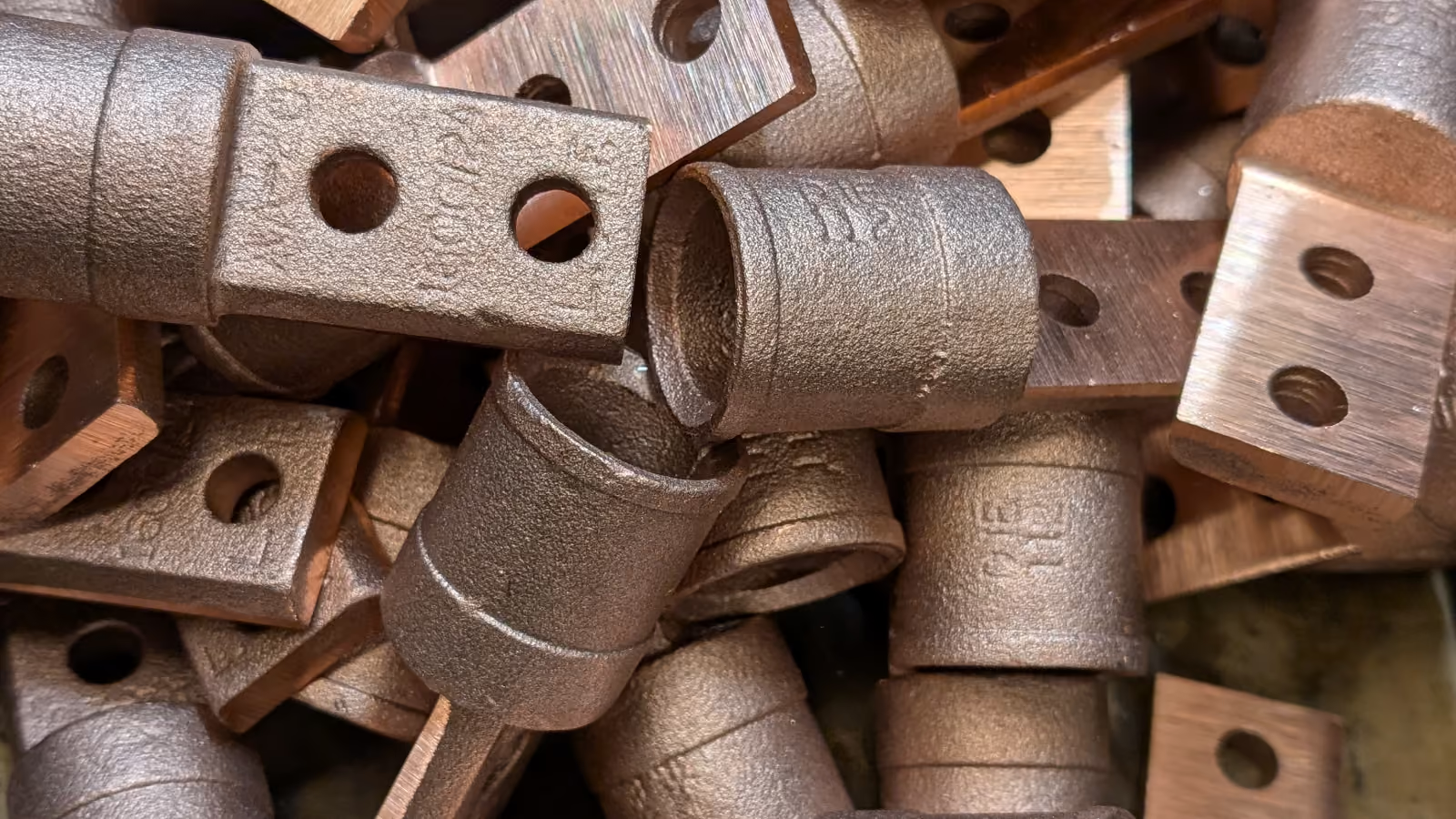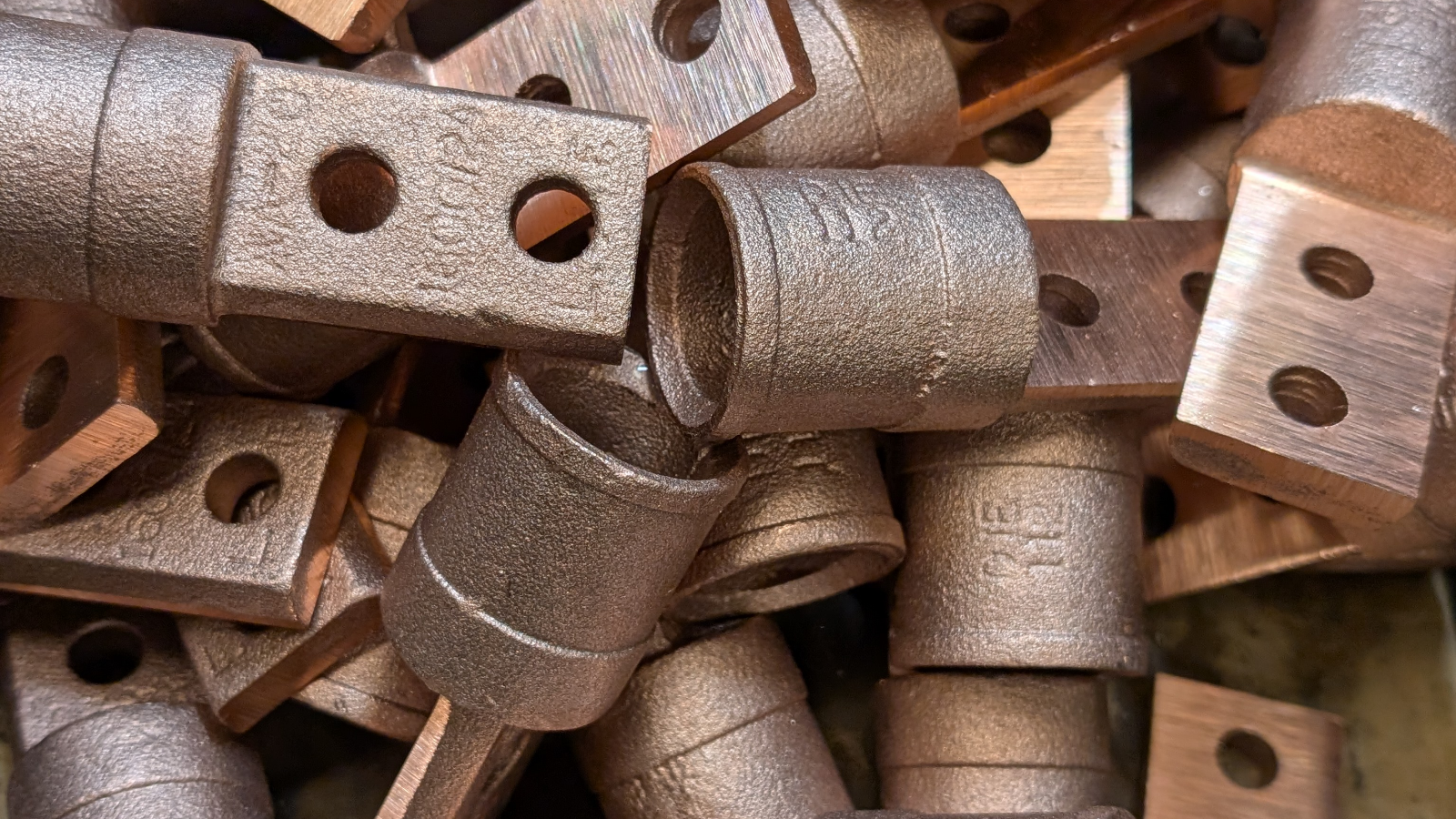
Finding a custom brass casting manufacturer means checking each foundry’s alloys, part size limits, pattern options, and test records. Brass grades add UNS numbers and shorthand names to that list. Comparing those details between foundries takes time.
At Lincoln Foundry, we’re a custom brass casting manufacturer that pours castings to your specified alloy and verifies the chemistry of every heat. Each part is traceable and arrives ready for your own machining. Read on to learn more about brass alloy options, pattern work, and ordering to spec.
Get a Quote for Custom Brass Castings »
Copper-zinc grades are the most common metals poured in copper foundries. Each cast brass carries a UNS number that places it in a block of alloys with similar chemistry:
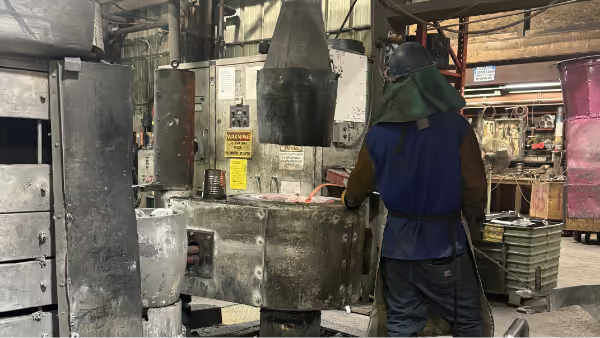
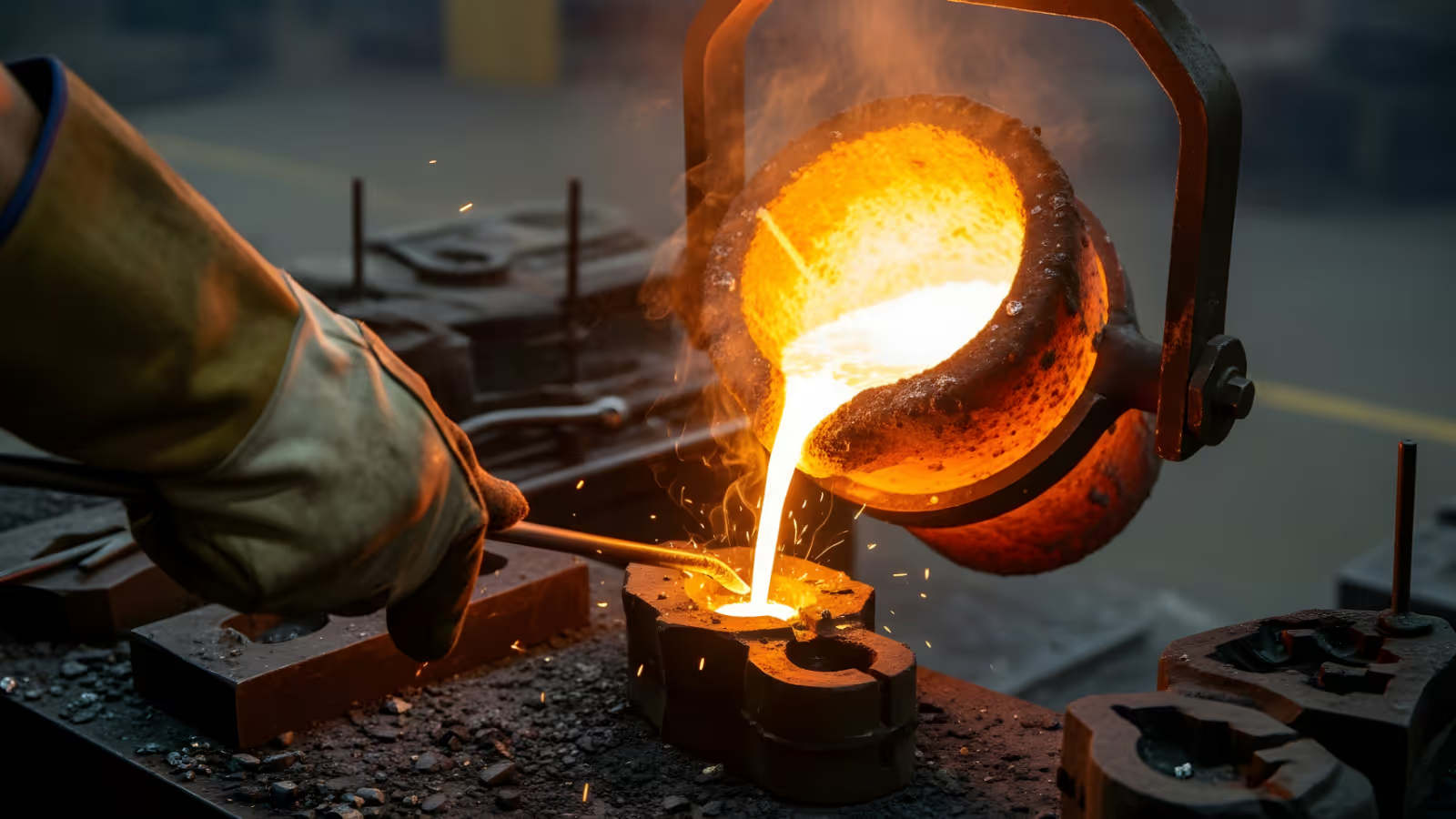
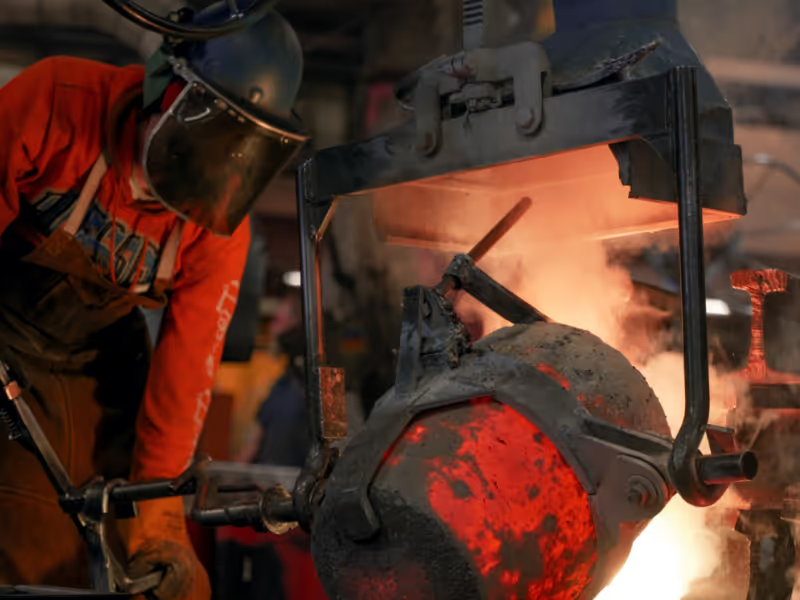
Lincoln Foundry is a family-owned Erie foundry in its third generation with more than 50 years in business. We pour red brasses and manganese bronzes for custom brass parts. Our melt control relies on two 175 kW electric induction furnaces and immersion pyrometers. New jobs are quoted as raw or rough castings ready for your machining.
Our custom brass work covers material, testing, size, and finishing needs:
C83300 and C83600 belong to the red and leaded red brass block, while C84400 falls in the leaded semi-red brass block directly above it. Of the three grades, C83300 carries the most copper and the least lead, and C84400 carries the least copper and the most lead. Between them sits C83600, also called ounce metal, with 84 to 86 percent copper and equal 4 to 6 percent ranges of tin, lead, and zinc.
Shorthand names list the nominal copper, tin, lead, and zinc percentages in that order. ASTM B584 lists C83600 as 85-5-5-5 and C84400 as 81-3-7-9 or valve composition. Each nominal figure falls inside the composition range in the table for that grade.
Lead is present in leaded grades such as C83600 to promote pressure tightness and free machining during manufacturing. Federal law limits drinking water plumbing to a weighted average of 0.25 percent lead on wetted surfaces. Plumbing used only for nonpotable service such as manufacturing, industrial processing, and irrigation is exempt from that requirement.
Each of C83300, C83600, and C84400 carries more lead than the 0.25 percent limit. Our foundry pours lead-free C89833 and silicon grades C87300 and C87500 for parts in potable water service. These lead-free grades are held to a 0.09 percent lead maximum under their UNS limits.
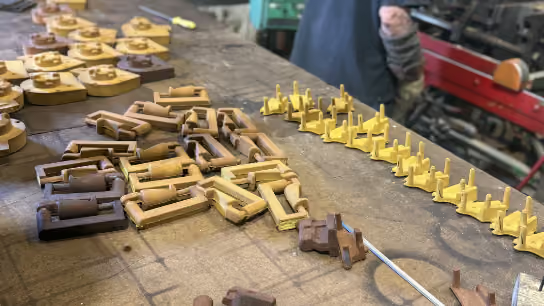
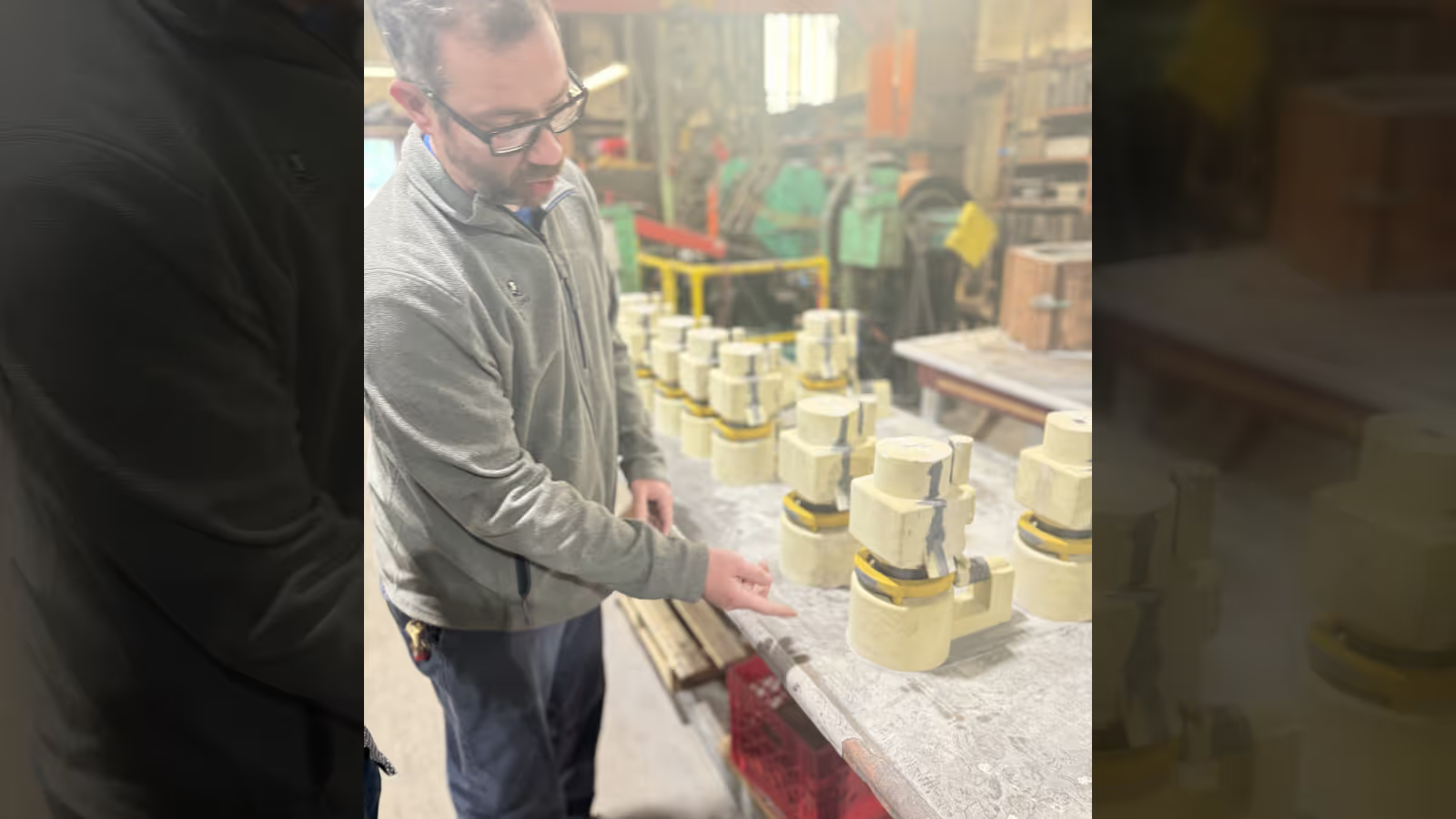
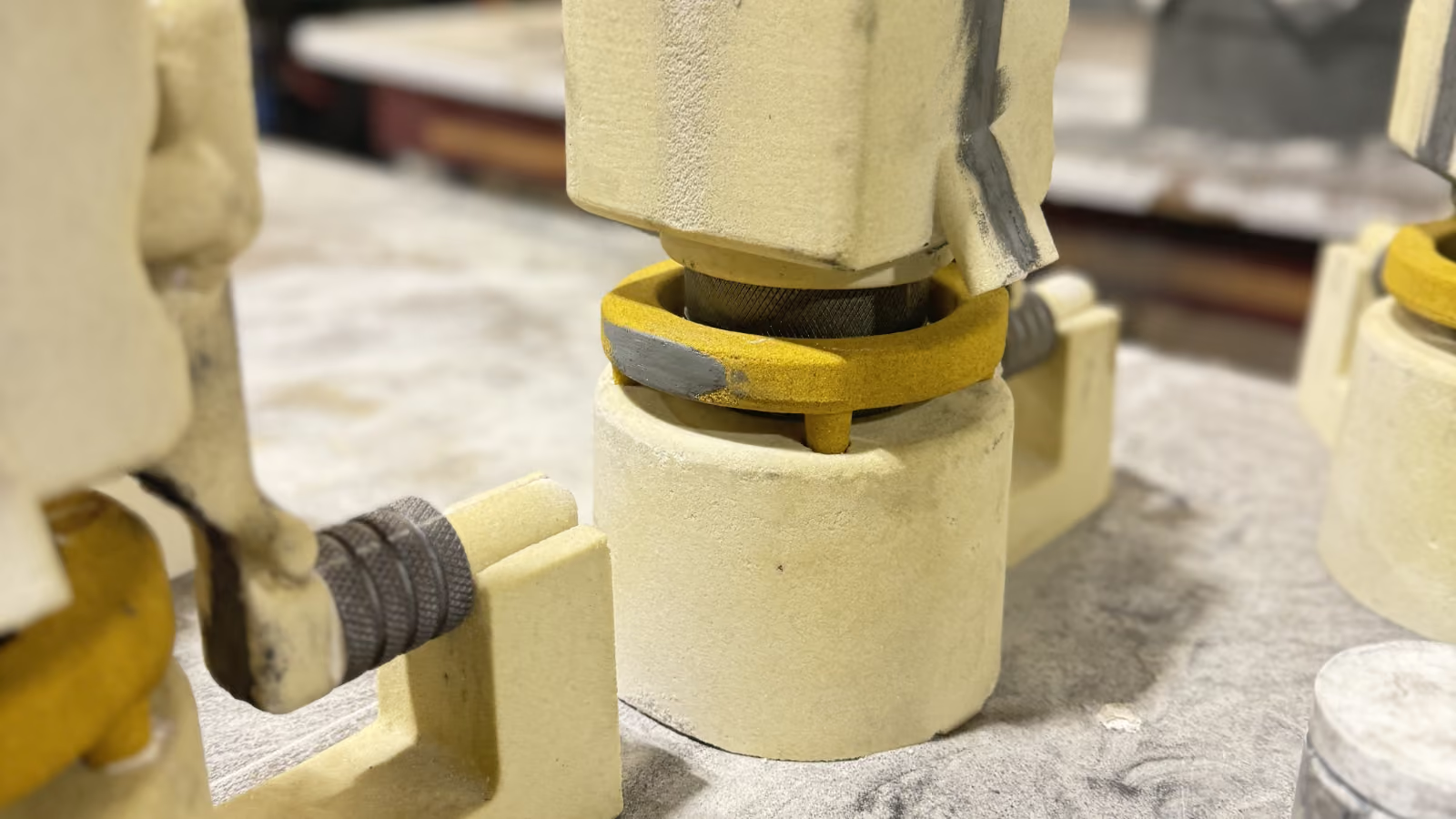
We build new tooling from your drawings or reuse your existing tooling. Pattern materials include wood, aluminum, plastics, and 3D-printed media based on the final part specifications. Each pattern is built to dimensional standards for an accurate casting.
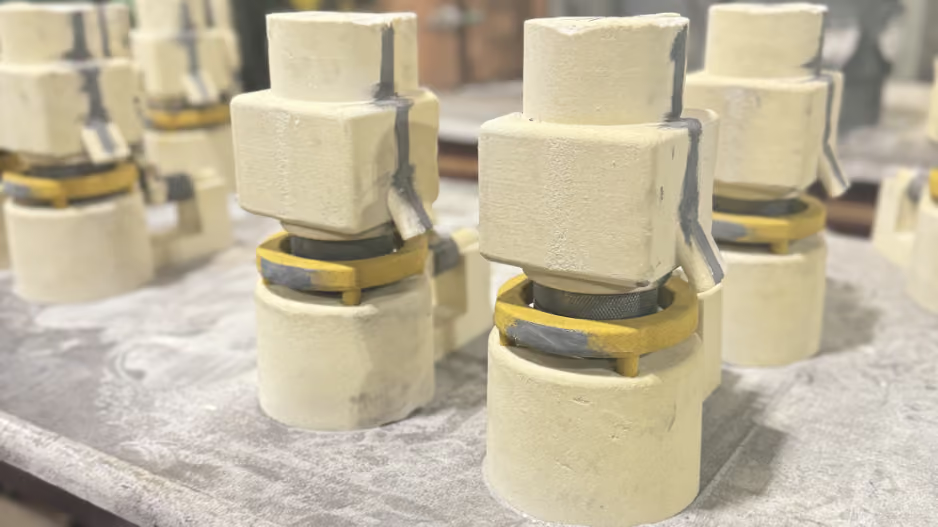
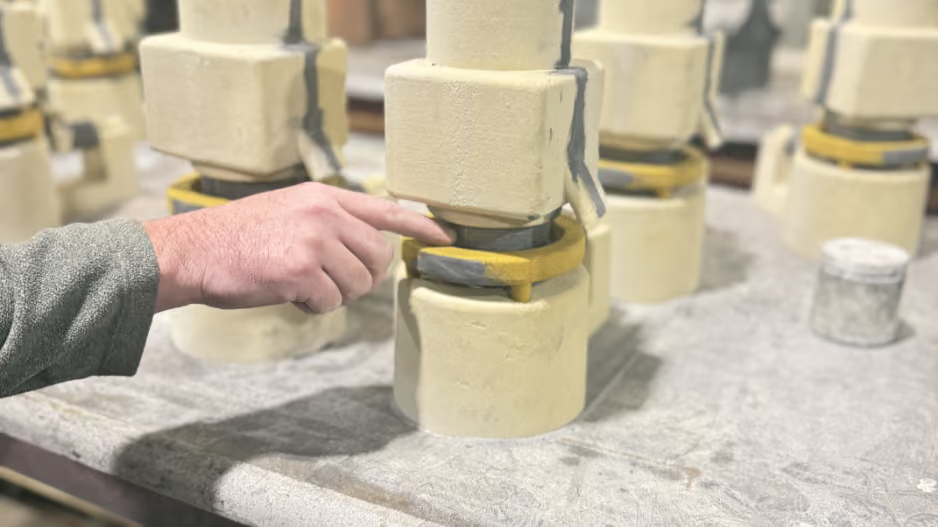
Gating and risers are rigged onto each pattern with CAD/CAM and CNC technology. The rigged pattern is then mounted onto a board to form the mold cavity. Molten brass enters that cavity through the gating system.
ASTM B584 is one of several ASTM specifications for cast copper alloys and covers sand-cast parts for general applications. Castings made to it must conform to the composition limits for each named element. Tensile strength, yield strength, and elongation must be determined as well.
B584 castings must never be repaired, plugged, welded, or burned in. Send your drawings with the UNS number and ASTM specification for a free quote. Note any need for certificates of analysis or test bar results on the same request.
Custom brass castings start with the right alloy, an accurate pattern, and a clear purchase specification. Chemistry checks and documented pours from your manufacturer give you a record of each part’s alloy.
Lincoln Foundry pours red brasses, manganese bronzes, and lead-free C89833 for custom brass parts. We check the chemistry of every heat and build patterns from your drawings or existing tooling.
Click below for a quote and to learn more about custom brass castings from our Erie foundry.
Christopher Campbell
Experienced leader at Lincoln Foundry with 15+ years spanning shop floor to ownership. Combines hands-on molding expertise with executive oversight, RFQ quoting, and metallurgical testing to deliver high-quality non-ferrous castings with exceptional consistency and low defect rates.
Key Differentiators