Quotes for metal casting services can cover different amounts of work and make prices difficult to compare. Sorting out those differences can be challenging without a clear understanding of the scope.
At Lincoln Foundry, our casting quotes give you a defined scope for planning the full cost of your part. You can budget for any remaining production work and keep final machining under your control.
Read on to learn more about our metal casting services and the factors behind material selection, production requirements, and cost.
Get a Quote for Metal Casting Services »
Casting metals differ in strength, wear resistance, corrosion resistance, and electrical conductivity. Engineers match these properties to the part’s operating conditions when they select a metal for sand casting.
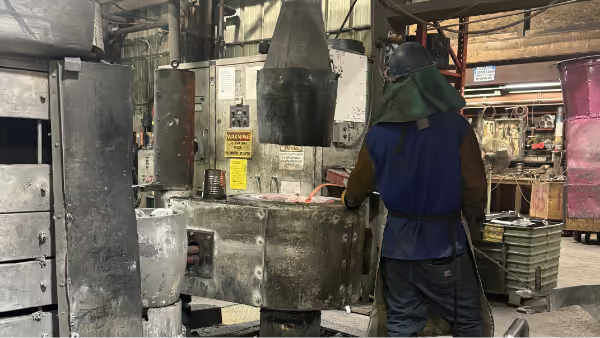
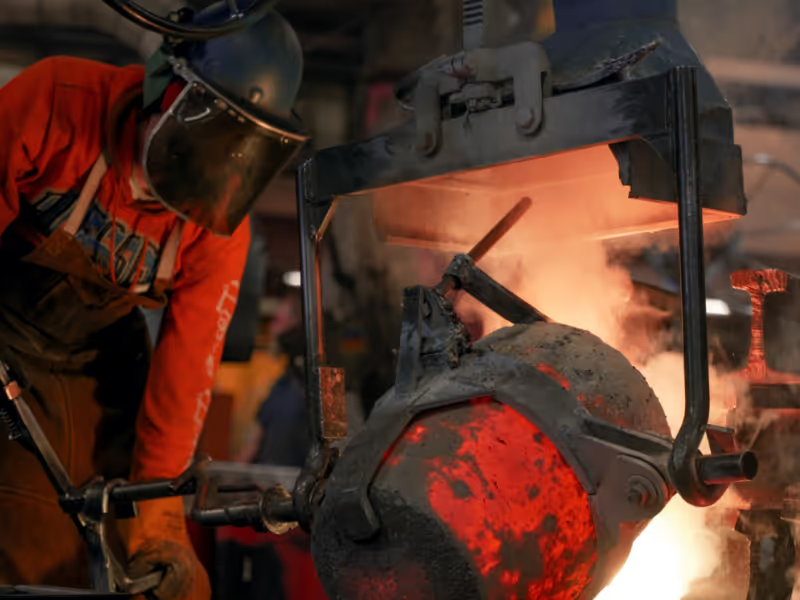
Lincoln Foundry is a third-generation, family-owned sand casting foundry that has operated in Erie, Pennsylvania, for 50 years. Metal for every casting is melted in our two 175 kW electric induction furnaces. The metal temperature is checked with immersion pyrometers that the manufacturer calibrates periodically.
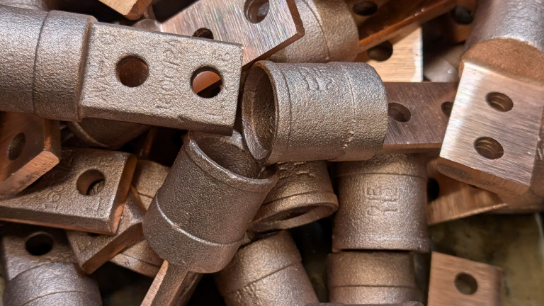
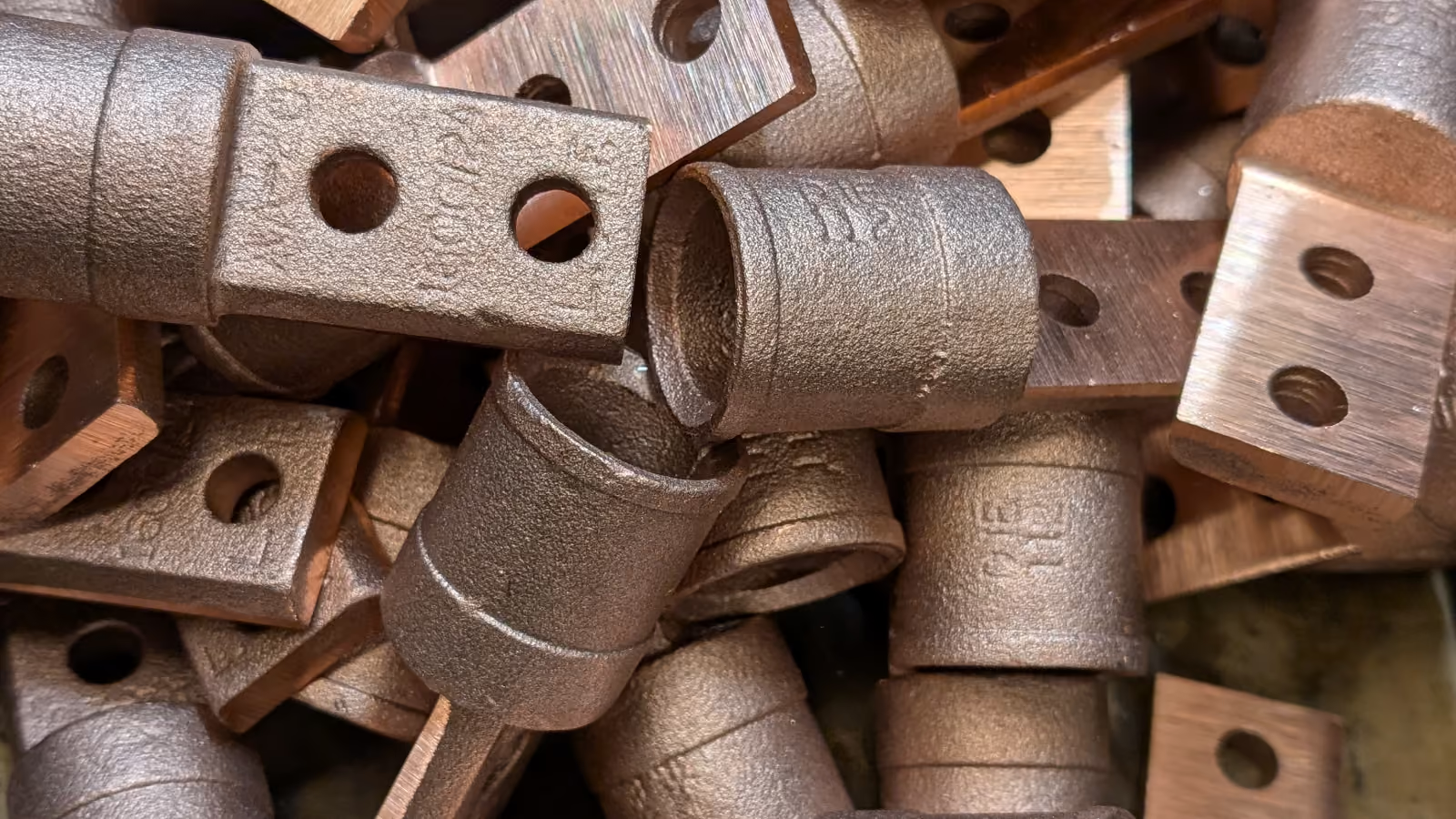
We quote new work as raw castings and offer shot blasting and grinding.
We provide certificates of analysis on request for the certified raw ingot used in your castings. Alloys are kept separate throughout the facility under our material-handling procedures to prevent cross-contamination. Each pour is recorded and traced to the foundryman who made it.
Our team visually inspects each casting at shakeout, during grinding and cleaning, and before final packaging. We check the surface for cracks, pits, and shrinkage during these inspections. Critical features are measured with precision gauges and calipers against the dimensional tolerances on your drawing.
Lincoln Foundry provides free quotes from the drawings you send. New work is priced as a raw casting ready for your machining. We build a new pattern from your drawings when no existing tooling is available.
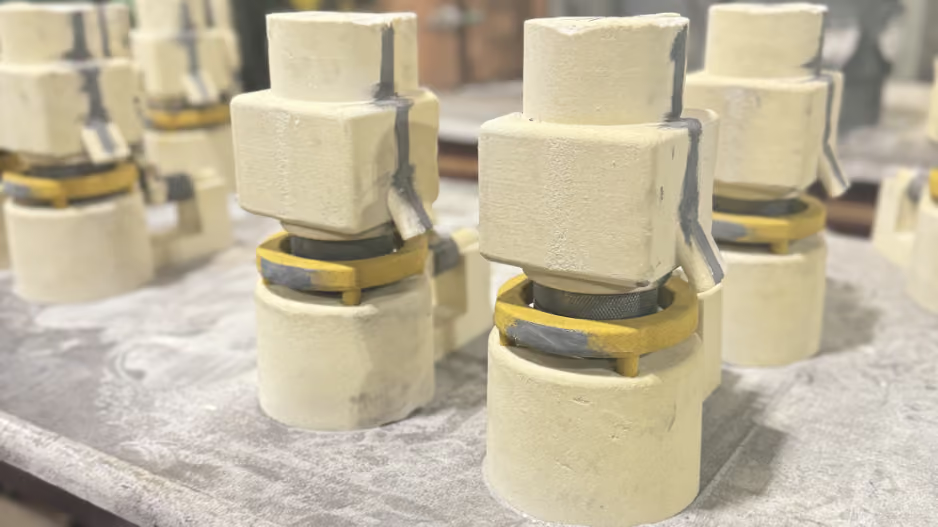
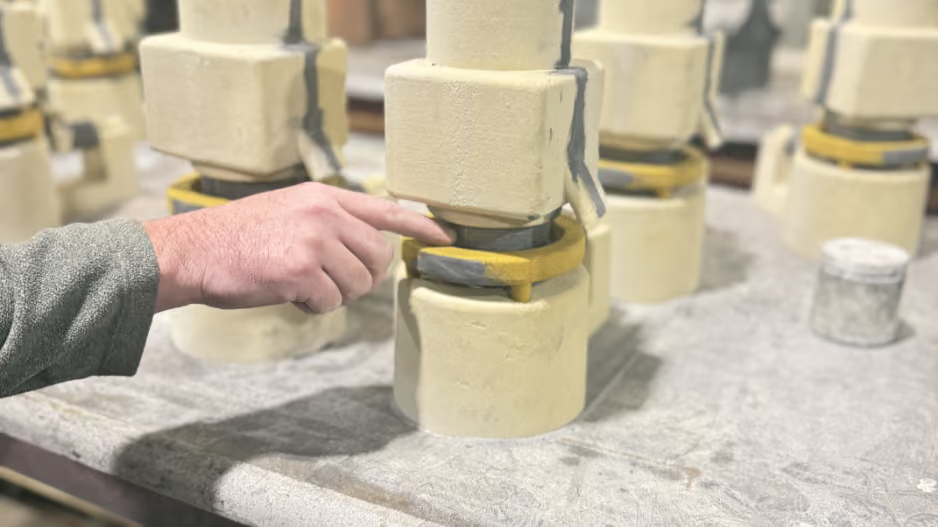
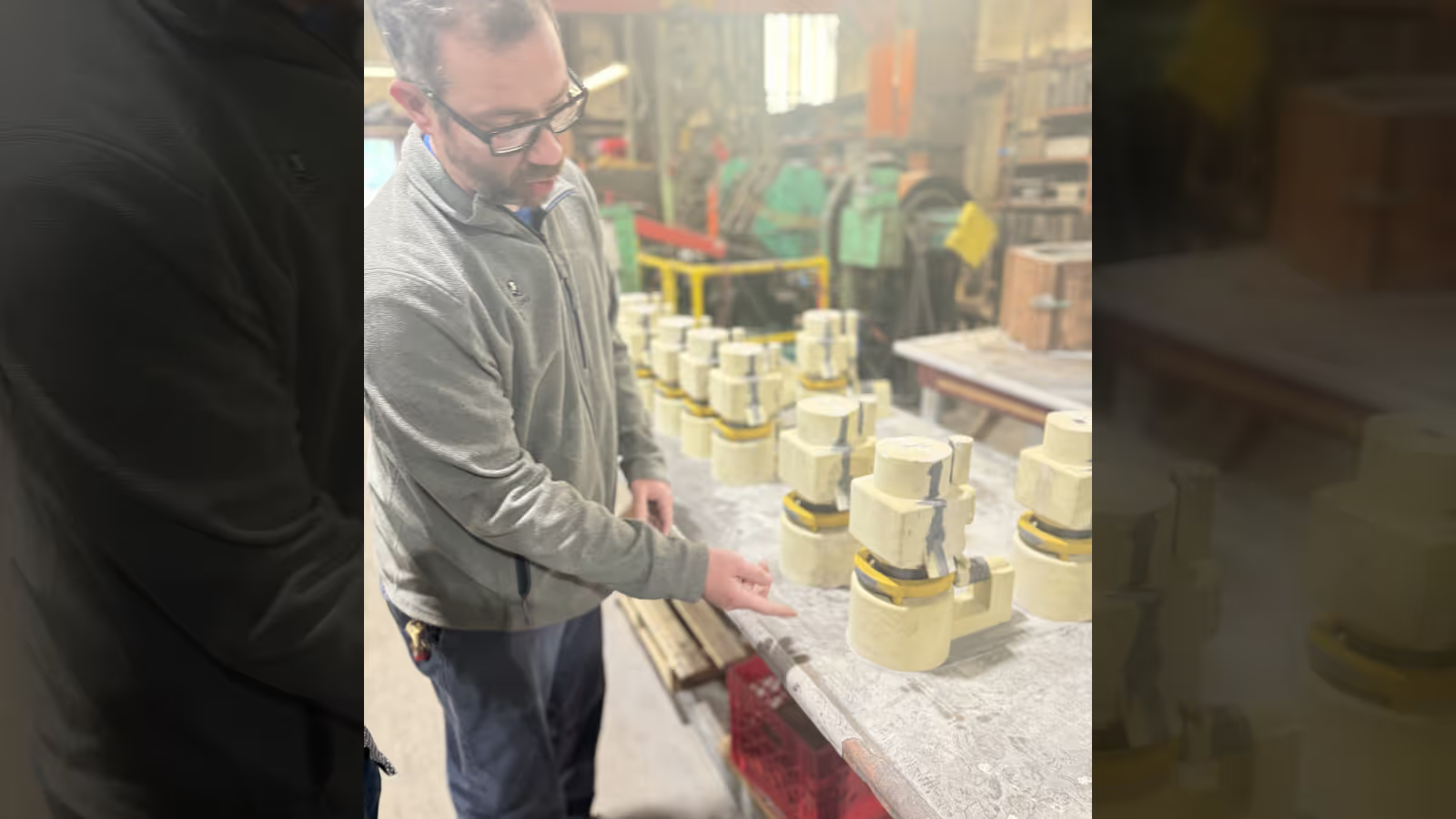
Pattern material is chosen based on the final part specifications. Our team rigs each pattern with gating and risers using CAD/CAM and CNC technology. The rigged pattern is then mounted on a board and used to form the mold cavity that receives the molten metal.
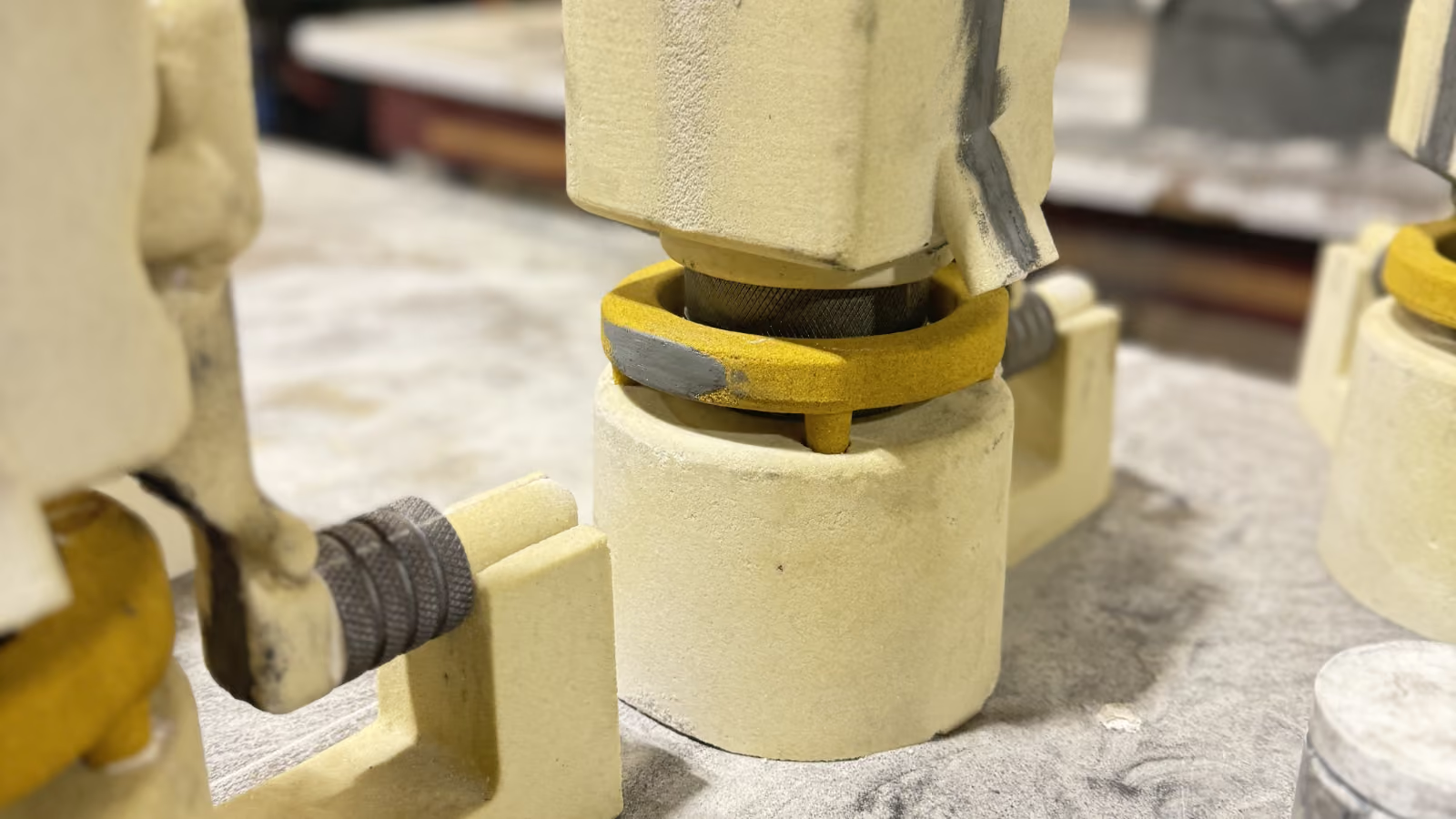
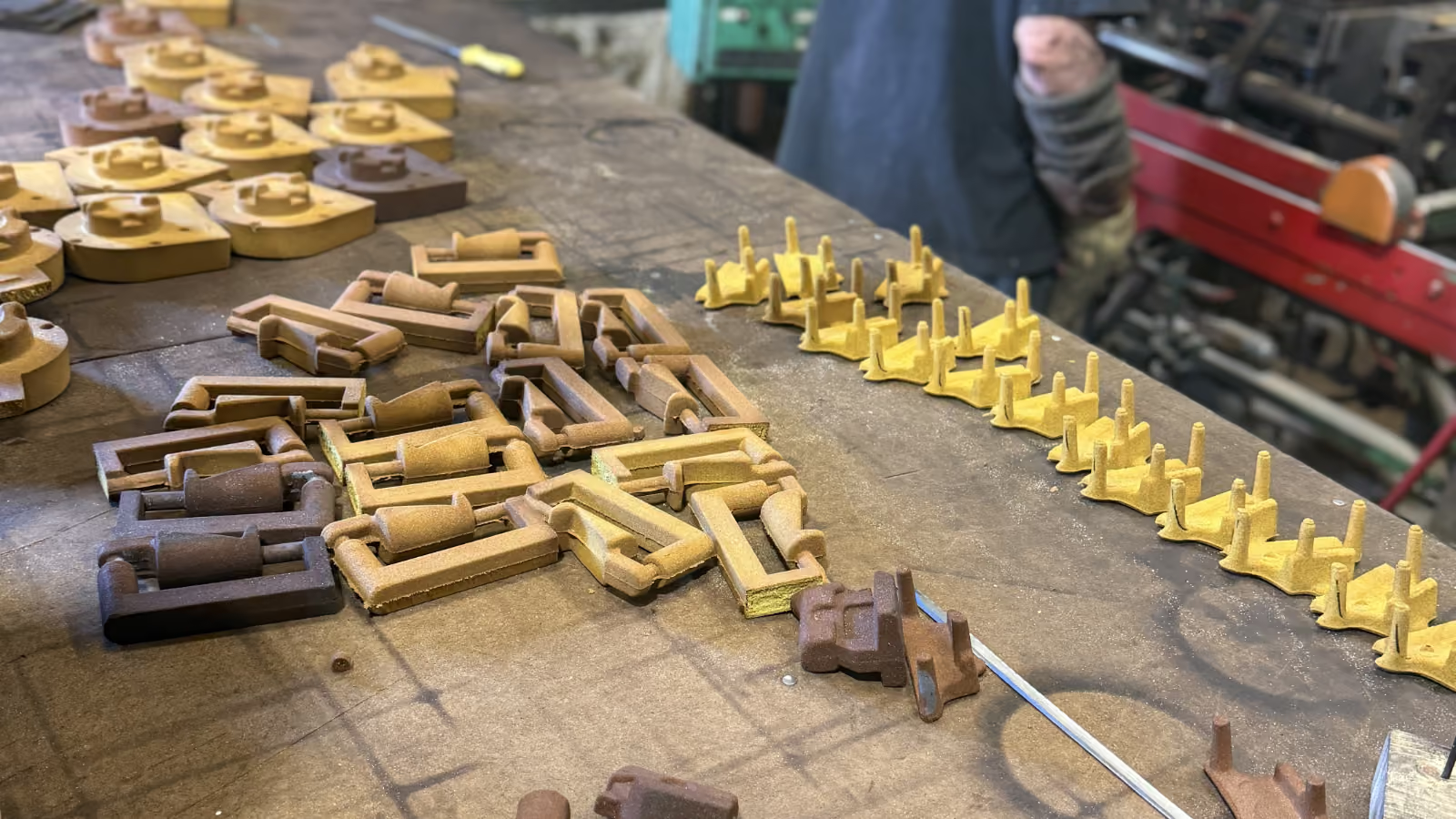
Foundry workers pack prepared sand around a pattern and withdraw it to leave the cavity that forms the casting’s exterior. Separate sand cores form internal features that the main mold cannot produce on its own. These cores occupy the spaces that must remain hollow as molten metal fills the surrounding cavity.
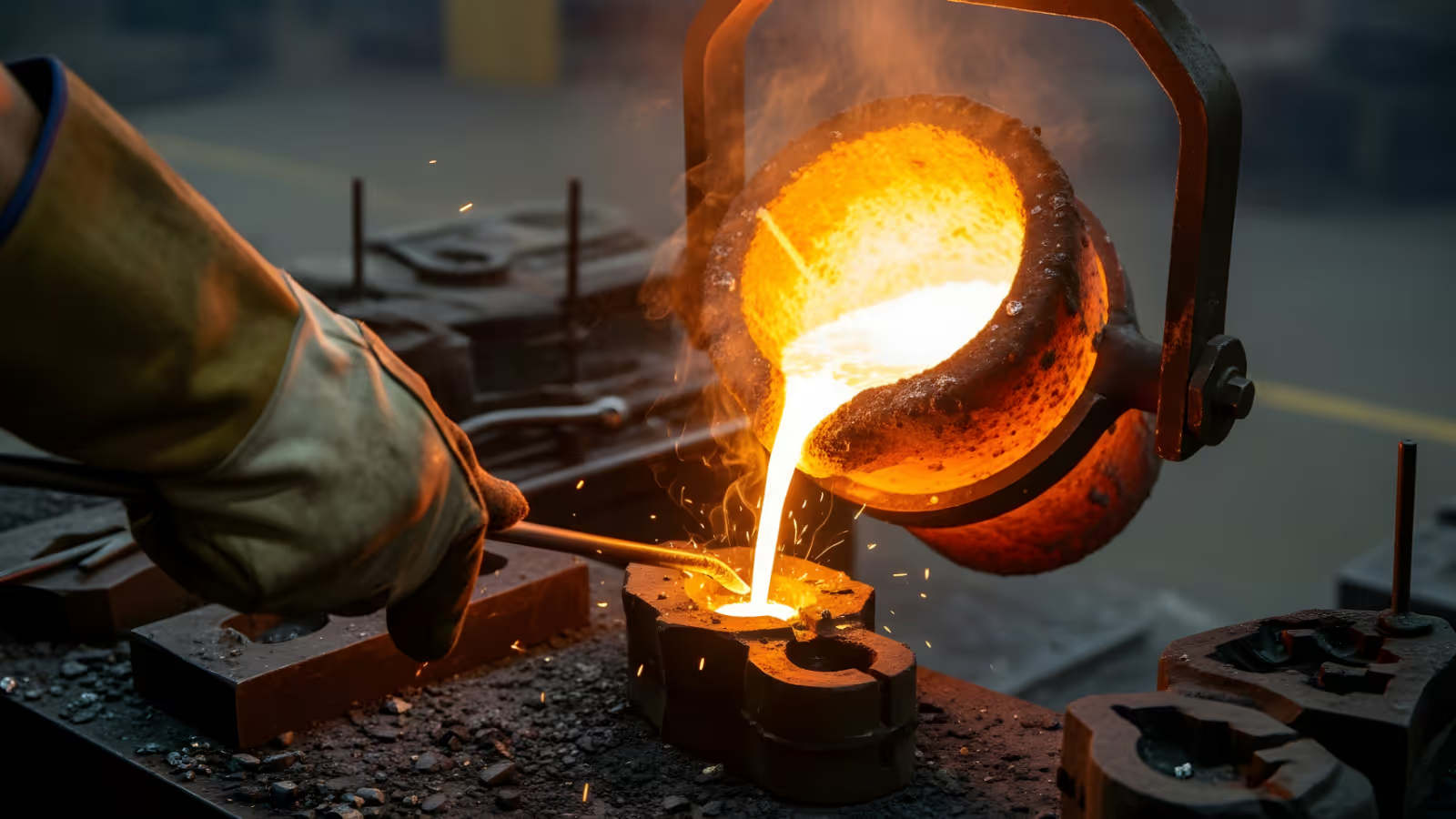
Molten metal is poured into the closed mold and takes the shape of the cavity as it solidifies. The sand mold is then broken apart during shakeout to release the casting. This leaves a raw component with attached gates and other excess metal that must be removed during cleaning.
Sand casting patterns are withdrawn intact before pouring and can be reused to make additional molds. Investment casting typically builds a ceramic shell around a wax pattern, then melts out the wax to leave the mold cavity. Recovered wax can be reconditioned and reused, but each new shell still needs a newly formed pattern.
Investment casting’s ceramic shell can reproduce fine surface detail from the wax pattern in the metal part. In sand casting, the molding material helps determine the surface texture, and finer finish requirements may call for a different molding medium. Grinding or machining can provide additional finishing when the specified surface cannot be achieved directly from the mold.
Expected production volume helps determine the pattern equipment included in a casting quote. Wood and plastic can suit shorter runs, while higher volumes may justify more durable metal tooling for repeated molding. Dividing a fixed tooling expense across twice as many usable castings halves the tooling cost allocated to each part.
Larger production orders can improve manufacturing efficiency, but any savings must be weighed against the cost of holding castings until they are needed. That inventory ties up money and requires storage space during the holding period. A reduction in demand or a change in part design can leave castings unused and offset the benefit of a lower unit price.
A finished-part drawing can include dimensions that will be achieved only through subsequent machining. The casting requirements must identify the dimensions and tolerances needed in the raw component, including its surfaces reserved for machining. The foundry and customer agree on those casting tolerances before production begins.
A surface marked for machining needs extra metal so cutting can bring it to the finished dimension specified on the drawing. This machining allowance varies with casting size and accuracy as well as the required surface finish and machining method. Too little stock can prevent the required dimensions from being reached or leave areas of the cast surface unmachined.
Metal casting services should match the part’s requirements and the intended condition at delivery. The choice of alloy and casting process affects part performance and the amount of finishing required.
Lincoln Foundry supplies raw castings to agreed requirements for the next stage of your project. Our material checks help confirm the specified alloy before further investment in machining or finishing.
Click below for a quote and to learn more about our metal casting services for industrial parts.
Christopher Campbell
Experienced leader at Lincoln Foundry with 15+ years spanning shop floor to ownership. Combines hands-on molding expertise with executive oversight, RFQ quoting, and metallurgical testing to deliver high-quality non-ferrous castings with exceptional consistency and low defect rates.
Key Differentiators